

Part 4 | Reporting the Climate: A (Doable) Tip Sheet (For News Managers and Editors)
How about an editorial policy on the climate? Copyediting skills can make a story fly, or cripple it. Practice what you report: have you made your newsroom kinder to the climate?


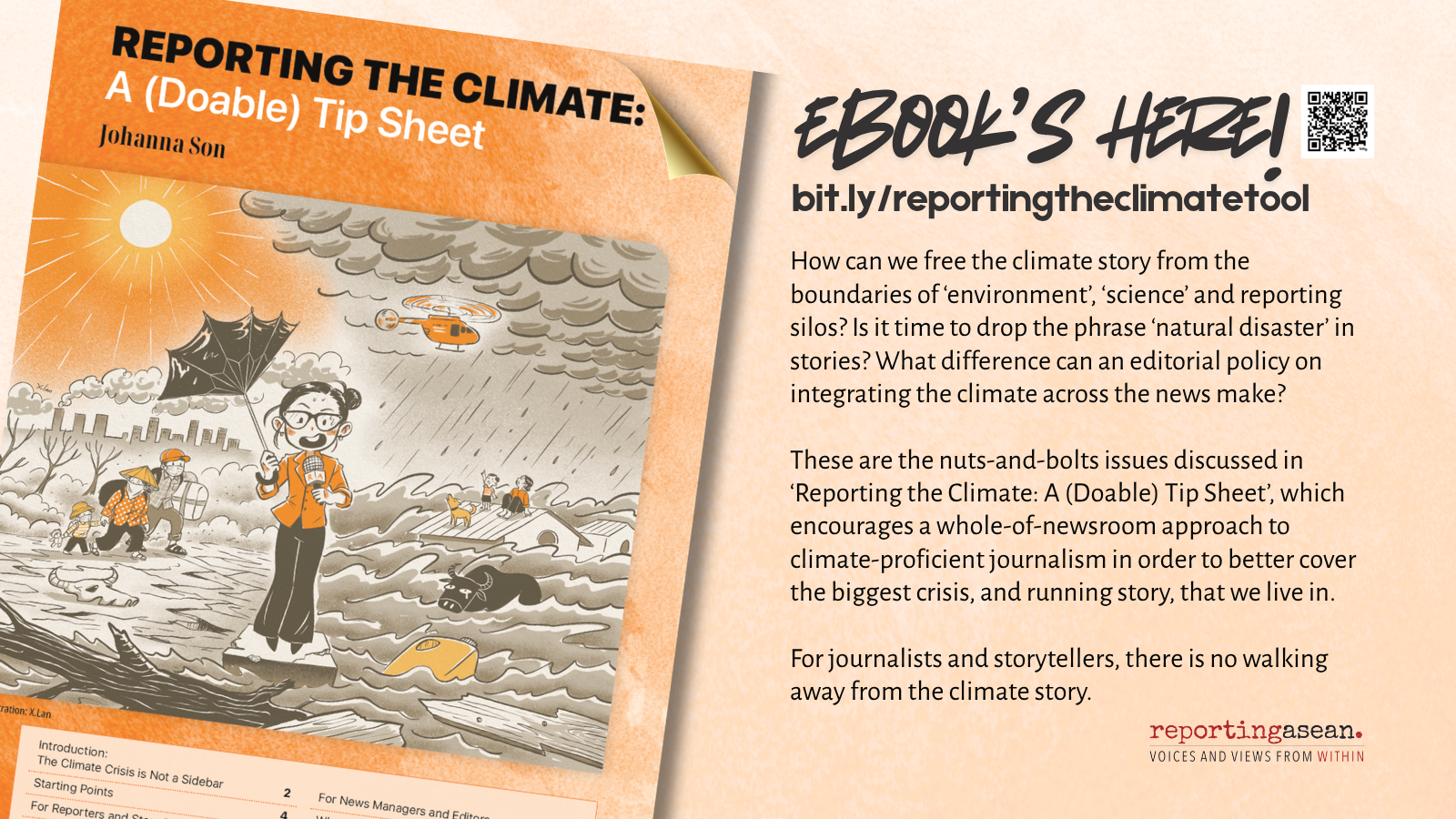
The full eBook can be read here. For Part 3 of this eBook in this newsletter series, click here.
1 Say it loud and clear. Draw up an editorial policy that becomes the compass for your team’s climate-related coverage, one that uses a whole-of-newsroom approach.
This policy would set the direction for climate-skilled coverage as a crucial part of your news outlet’s responsibility to the public – and drive your work around the biggest story of our time.
This can then drive editorial and management decisions in reporting and editing, story development, newsroom structures and habits, the drafting of style guidelines and adjustments in reporting/editing focus and language, training of staff, managing resources and budgets, product design as well as engagement with audiences.
All staffers would know that climate is for the whole team to follow, regardless of their beat assignments and the sections they are part of. Investment in good climate storytelling can lead to the development of a stronger news brand, including products you can create.
2 Start with what’s doable in recalibrating the newsroom. There are practical steps and options, many of which do not entail financial costs, to strengthen climate skills.
Some ideas:
>Create spaces in your news product for climate-related stories in order to give them a higher profile.
This can mean:
reviewing the tabs and sections of your website, newspaper or newsletter, reorganising them, putting a climate section or category
thinking about a product around climate and related issues, be it a podcast or newsletter or editorial cartoons
creating a routine or schedule for producing climate-related features or stories
>Identify talent you may already have in your team, such as individuals keen on the climate or on doing data stories or visuals, or an editor who can specialize in handling copy on the climate crisis or direct coverage by reporters
>Invest in upgrading the skills of everyone in the newsroom, including by hosting briefings, discussions with your team and encouraging participation in training or fellowship programmes
News managers can choose to form a climate team or desk, or designate a climate correspondent.
But even without these ‘formal’ steps, a news outlet and its staff can be climate-skilled. The quality of coverage will speak for itself.
3 Still running weather updates the same old way? It’s time to upgrade this and catch up with our changed climate realities.
There is no more important time than now to talk about the weather, which we all now follow closely as we live through the climate crisis.
Carrying the daily forecast by a national weather agency, which is typically around the temperature range for the day and whether it will be sunny, cloudy or rainy, is no longer enough given our stressed planet. (Weather is what you see outside your window at a moment in time, while the climate refers to the pattern of weather over time.)
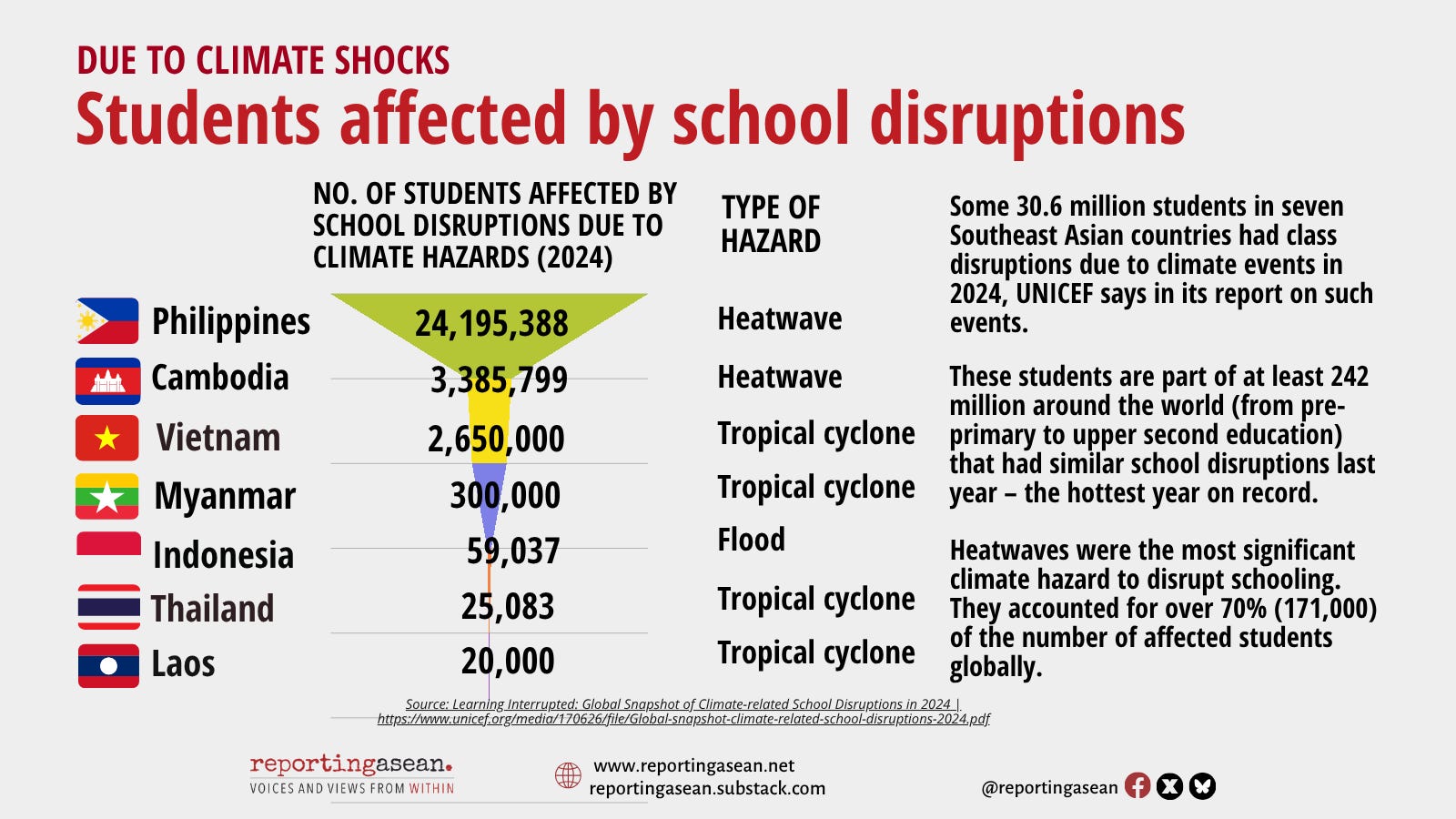
Much more in-depth reporting is needed around the heat and its impacts. A tropical region like Southeast Asia knows heat, but unnatural heat is a different matter. We have not always perceived or tracked heat as a threat to health and life, but we now need to. Many countries in the region do not have systems to monitor heat-related illnesses, for example. Yet we now have 11 more extra hot days a year, on average, globally.
Checking the heat index, especially since the 2023 and 2024 record-breaking heatwaves, has become common, but weather reports in the news do not always use this data. The heat index is usually the ‘feels like’ temperature, conveying temperature and humidity in shaded areas. Higher humidity adds to how hot it feels.
But what is regarded as the most complete measure of heat stress is the wet-bulb globe temperature (WBGT). This is a metric of heat-related stress on the human body, based on temperature, humidity, wind speed and solar radiation in direct sunlight.
Providing WBGT data would give people a quality measure of the risk of being outdoors on dangerously hot days. Wouldn’t that be a service to the public? WBGT has been long used by international and other agencies, including by armies and sport organisers, to set work practices and activities in the heat and outdoors.
If you check your smartphone, you’ll find that weather applications already go beyond what many news outlets carry.
On Apple’s Weather application, users can check the actual temperature and the ‘feels like’ temperature, which Apple says is a figure “as a result of humidity, sunlight, or wind”. It now also shows comparisons between the day’s temperature range and average high with data since 1970.
Accuweather reports actual temperature, as well as its RealFeel and RealFeelShade indicators. Included in the RealFeel equation are cloud cover, winds, sun intensity and angle of sun (which changes during different times of the day).
Singapore’s meteorological service uses WGBT in its heat stress advisories, and has a website for these. The Philippines’ weather agency carries the heat index only in the hotter months, from March to May. Zoom Earth shows WGBT and heat stress readings around the globe.
Apart from upgrading weather reports, think about how to liven them up or bring them closer to what people encounter daily. In its evening programme that it expanded to ‘weather and climate’, France Televisions invites questions from viewers and has used events like the 2024 Paris Olympics to dive deeper into how the climate has warmed over time at the sites of sports events.

4 Develop or update editorial guidelines for your news team. These would reflect the editorial style and perspectives of your newsroom on climate-related storytelling.
If you have a style guide for the newsroom, it’s a good time to update it with material relevant to reporting about the climate across different topics. If you don’t have such a tool, this can be the time to work on that too.
Whichever way, your guidelines would let staffers and contributors know that the climate is a news priority and explain how this is to be reflected in your news product. Your in-house style tool can list preferred terms and concepts for reporters and editors to use (and which to avoid). It can also share sources of quality information and statistics handy for reporters and editors to use in stories. (See also tip number 6 in ‘Starting Points’.)
5 Invest in building solid skills in copyediting and editorial guidance, so your team can better produce quality stories and editorial products around the climate.
Discussion of, and credit for, climate-related stories often focus on the writer, reporter or producer – and the role of the editor is often ignored or rarely mentioned. But no story gets published without the editing and feedback process, and this is also why climate proficiency is for the entire newsroom.
Skillful editing based on enough knowledge about the climate can make a story fly, but weak copyediting can cripple it.
The lack of basic familiarity with the conversations around climate issues is a journalistic handicap. Beyond checking grammar and structure, a climate-capable editor can spot inconsistencies and holes in stories, as well as questionable conclusions and assumptions. This editor can also do better verification and fact checking, based on a personal knowledge of solid sources to use in improving copy.
6 Do you practice what you report about? Think about doing your bit to reduce the carbon footprint of your workplace.
Because the climate affects everyone and everything, newsrooms can do their bit in ways big or small. This can mean discouraging the use of plastic water bottles and installing a fill-your-own-container system for drinking water in the office. You can adopt policies around reusing paper, saving electricity, installing solar panels or using electric vehicles.
Even without the net-zero targets of the type big companies have been announcing, there is always something we can all do. Your team may even enjoy being part of this process, suggesting and helping draw up steps and habits for a climate-friendlier work environment.
More data visualization on various aspects of the climate in Southeast Asia, done by Yvonne T Chua, are here.
The next (fifth) installment of ‘Reporting the Climate: A (Doable) Tip Sheet’ will be out on 13 April 2026 - Johanna, editor/founder of the Reporting ASEAN series